

The marbled duck is one of the seven species at critical risk of extinction in Spain
The number of breeding pairs in Spain, virtually the only remaining area of occurrence in Europe, was 74 pairs in 2020 and in decline. Habitat loss and degradation are the greatest threats for survival of the species. These wetlands are suffering the impacts of drought, pollution, the proliferation of artificial barriers and other threats caused by human activities.
News
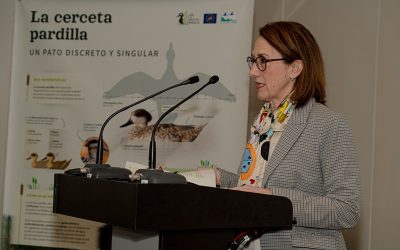
The restoration of more than 3,600 hectares of wetlands has contributed to the recovery and improvement of the marbled teal in Spain
After five years of coordinated actions involving public authorities, conservation organizations and the scientific community, the LIFE Cerceta Pardilla...
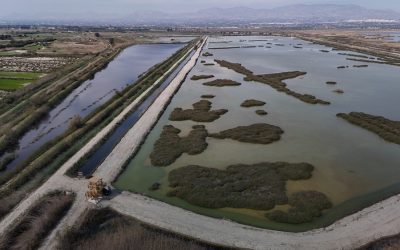
Restoration work at La Raja Lagoons in El Hondo Natural Park, Elche, have been completed
With the restoration of La Raja estate, the actions aimed at improving the ecological conditions of the group of wetlands known as La Raja Lagoons have been...
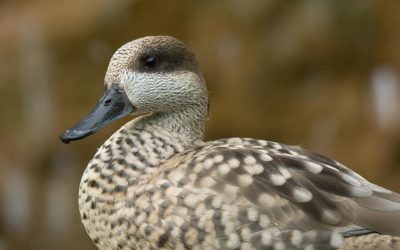
The marbled teal population continues its positive trend with 172 pairs and 1,427 chicks
The breeding season for the marbled teal (Marmaronetta angustirostris) in 2025 confirms a positive trend, with 172 breeding females and 1,427 chicks,...
The species

The marbled duck is one of the most representative breeding duck species in Spain. It is characterised by its small size, the dark patch around the eye, its spotted plumage and its crest or “topknot” on the nape, which is more visible on males.
Its European population is almost exclusively confined to wetlands in Spain, such as the Guadalquivir or the El Hondo marshes and Santa Pola salinas (salt pans) on the Mediterranean coast. Indeed, the marshes and lagoons of Andalucía, Murcia and Valencia are the most important regions in Europe inhabited by this small masked duck.
The degradation and loss of natural wetlands, its habitat, are endangering its survival and future
Video
Actions
In order to try and reverse the dramatic current situation of the marbled duck populations and its habitats, we have commenced a series of research, conservation, governance and awareness-raising actions.
Communication activities will be developed to spread news about the project’s results and to promote knowledge about the species.
With the LIFE Cerceta Pardilla, Spain will not only conserve one of the most emblematic duck species of our country, currently at risk of extinction, but also one of the most important ecosystems for the planet’s health, which is among our principal allies in the fight against climate change: wetlands.