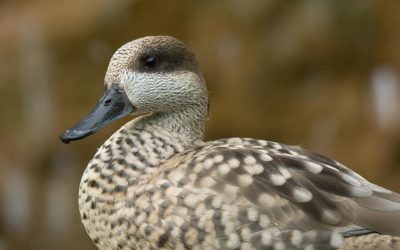
After five years of coordinated actions involving public authorities, conservation organizations and the scientific community, the LIFE Cerceta Pardilla project has come to an end, achieving, among other results, the restoration of over 3,600 hectares of wetlands and the reinforcement of the population of this critically endangered species. The population has reached 172 breeding females with 1,427 chicks in the wild, the highest figure recorded in the past two decades.
In addition, new breeding areas have been identified: nine in Andalusia and four in the Valencian Community. Particularly noteworthy is the case of the Region of Murcia, where the species has bred again for the first time in 15 years in two of its wetlands.
The results of this project, coordinated by the Biodiversity Foundation of the Ministry for the Ecological Transition and the Demographic Challenge (MITECO), were presented this Tuesday at the Ciutat d’Elx Conference Centre (Alicante). The event was attended by María Jesús Rodríguez de Sancho, Director General for Biodiversity, Forests and Desertification at MITECO, who highlighted that “the collective effort has led to excellent results for the recovery of this highly threatened species.”
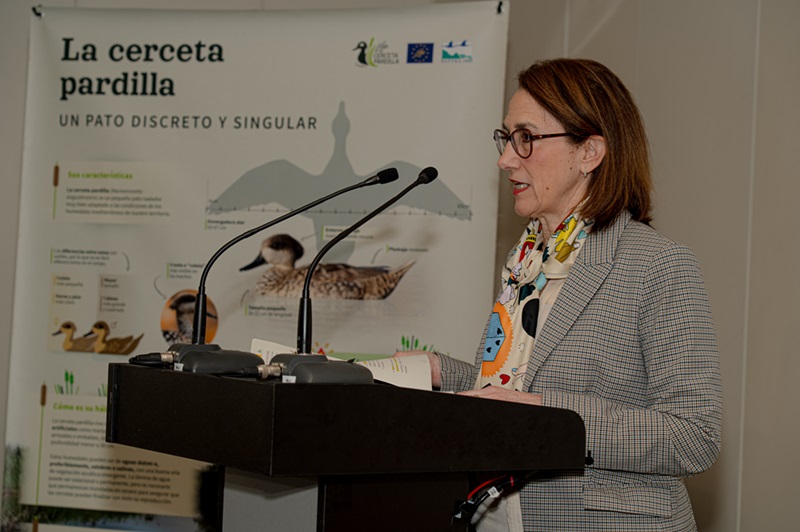
The event also included a debate involving representatives from the regional governments of the Valencian Community, Andalusia and the Region of Murcia, the Segura River Basin Authority, and the LIFE Cerceta Pardilla partner NGOs, SEO/BirdLife and ANSE, focusing on the importance of wetland restoration and the achievements made in species recovery.
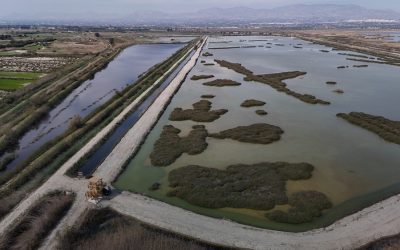
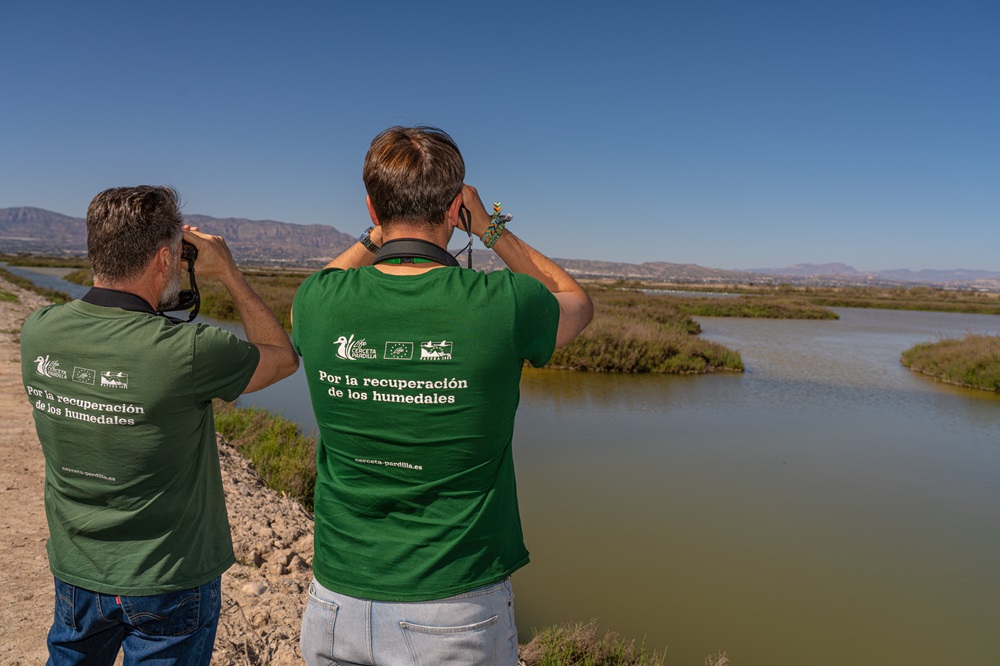
The participants then travelled to El Hondo Natural Park (Elche) to visit El Espigar and La Raja estates, acquired as part of the project and where measures have been implemented to improve the habitat of the marbled teal.
The video of the results presentation event is available here.
RESTORATION OF KEY WETLANDS
At both estates, which together cover an area of 141 hectares, water management has been improved, former irrigation infrastructures have been naturalised, and new nesting habitats for the species have been created. The sites have also been adapted for public use through the installation of information signage, three observation towers and a wildlife observatory.
Another key achievement was the recovery of 24 hectares in Brazo del Este Natural Area (Seville) and the restoration of two meanders of this former branch of the Guadalquivir River, generating a total of 50 hectares located in essential refuge areas for the species during years with unfavourable hydrological conditions in Doñana National Park.
In the Region of Murcia, restoration work at the Moreras Lagoon and Ramble included revegetation, reedbed control and water supply to ensure suitable conditions during the breeding season.
The project also promoted innovative habitat management approaches, such as a virtual fencing system in the Brazo del Este area. Using GPS collars fitted to cattle of the native marismeña breed, access to specific areas was controlled to manage reedbeds, create open flooded areas and improve habitat availability for the marbled teal.
Within the framework of the project, a best‑practice guide for marbled teal habitat management was produced, which will serve as a basis for future wetland management actions aimed at maintaining and attracting the species.
IMPROVING KNOWLEDGE AND MARBLED TEAL POPULATION REINFORCEMENT
The project significantly expanded scientific knowledge of the species through a genetic study conducted by the Doñana Biological Station (CSIC), which helped guide the ex situ conservation programme aimed at population reinforcement through captive breeding. Following the programme’s guidelines, 3,769 individuals were released in Spain and in strategic sites in Italy and Portugal, tripling the originally planned target.
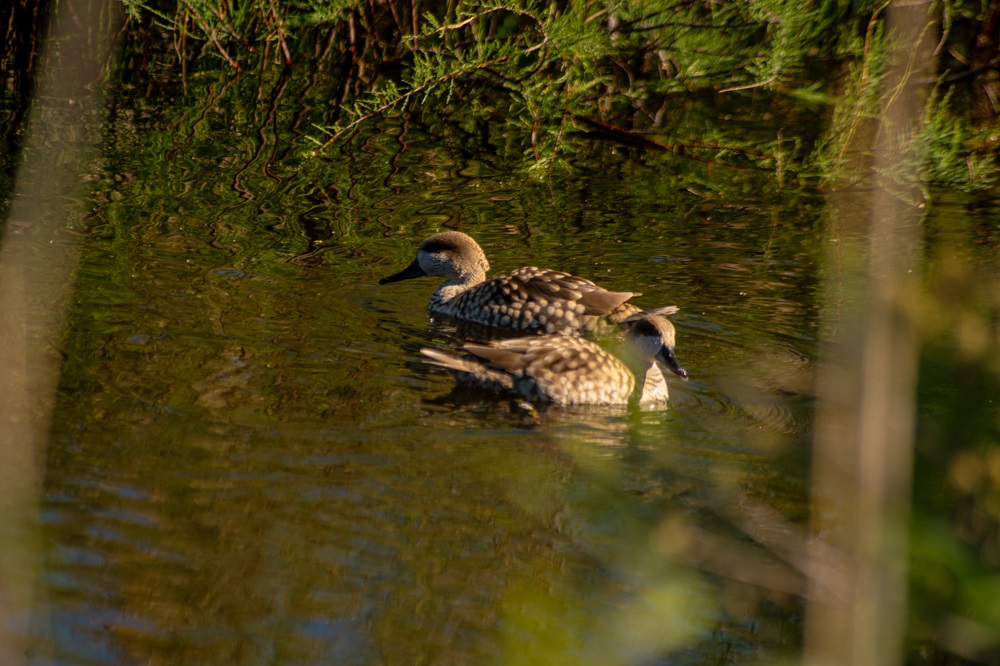
Captive breeding took place at reference centres including La Granja de El Saler and Santa Faz, managed by the Generalitat Valenciana; the Cañada de los Pájaros Private Nature Reserve in Seville; and the Jerez Zoobotanical Biodiversity Conservation Centre–Alberto Durán in Jerez de la Frontera.
Releases were supported through the construction of hacking enclosures and the installation of nest boxes in key wetlands, enhancing both survival and breeding success.
A tagging programme using GPS/GSM transmitters was also carried out, with data analysed by Miguel Hernández University of Elche. Monitoring of 164 tagged individuals revealed movement patterns between Spain and North Africa, differences in survival between wild and captive‑bred birds, and the identification of more than 60 wetlands used by the species. In parallel, five annual coordinated censuses were conducted in Spain, along with monitoring campaigns in Morocco, Tunisia and Algeria, providing essential information to understand the dynamics of the Ibero‑Maghreb population.
Thanks to institutional and technical coordination, the Strategy for the Conservation of the Marbled Teal, Red‑knobbed Coot, White‑headed Duck and Ferruginous Duck was updated in 2024, and support was provided for the development of the forthcoming Recovery Plan for the species in the Region of Murcia.
THREAT REDUCTION
The project implemented measures aimed at preventing accidental hunting, tackling poaching and strengthening surveillance during sensitive periods. Notable among these was the establishment of a Technical working group to combat poaching in the Lower Guadalquivir, bringing together public administrations, the Environmental Prosecutor’s Office, law enforcement bodies and the Andalusian Hunting Federation.
Agreements were also signed with hunting organisations that adopted voluntary measures to reduce the risk of species misidentification in hunting areas. In relation to other threats, protocols were developed for the control and prevention of botulism and cyanobacteria outbreaks to avoid mass mortality events.
SOCIAL DIMENSION
Land stewardship was another key pillar of the project, both to extend the reach of actions and to foster voluntary involvement across all sectors, particularly those engaged in economic activities linked to wetland conservation, such as livestock farmers and rice growers. In total, 15 agreements were signed, also involving third‑sector organisations and public administrations from the three autonomous communities.
In the educational field, 145 activities were carried out in 48 schools across 34 municipalities, along with 15 training workshops for teachers and environmental educators. In addition, 56 volunteer workdays, 11 sector‑specific seminars and a Best Practices Manual for Birdwatching Tourism in Wetlands were produced.
LIFE CERCETA PARDILLA
The LIFE Cerceta Pardilla project develops a set of research, conservation, governance and awareness-raising actions to strengthen the status of marbled teal populations in the wild, improve the status of wetlands and scientific knowledge of the species.
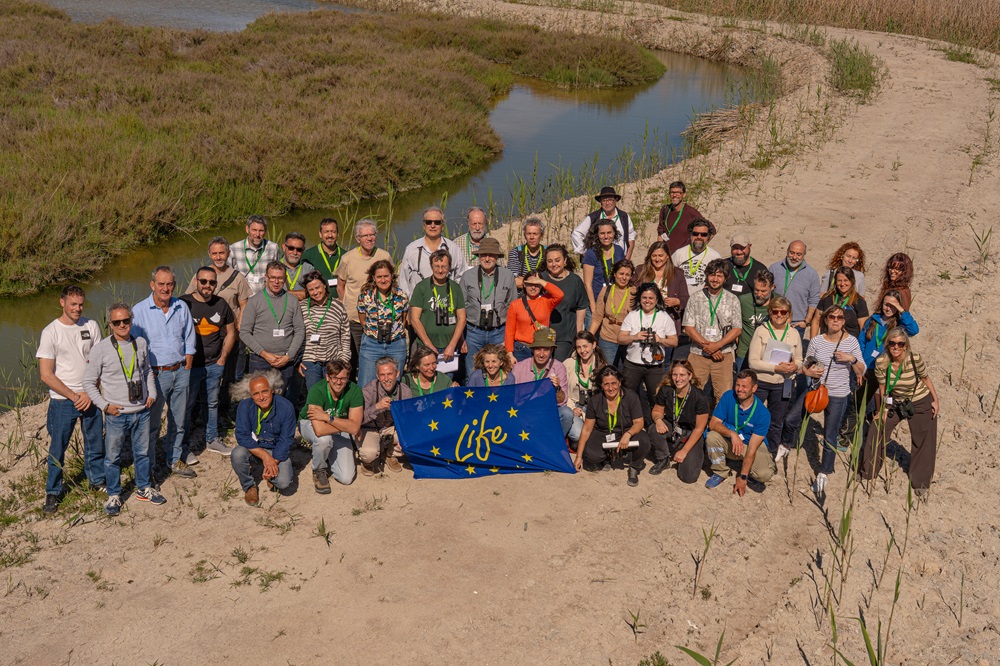
In this project, coordinated by the Biodiversity Foundation of the Ministry for Ecological Transition and Demographic Challenge, the participating partners are the ministry itself via the Segura River Basin Authority and Tragsatec, the Andalusian Government (via the Regional Ministry of Sustainability and the Environment and the Environment and Water Agency), the Valencia Regional Government (via the Regional Ministry for Environment, Infrastructure and Territory), the Murcia Regional Government (via the Regional Ministry for the Environment, Mar Menor, Universities and Research), as well as the non-governmental organisations SEO/BirdLife and ANSE. The project is supported by the LIFE Program of the European Union and the Directorate-General for Water.