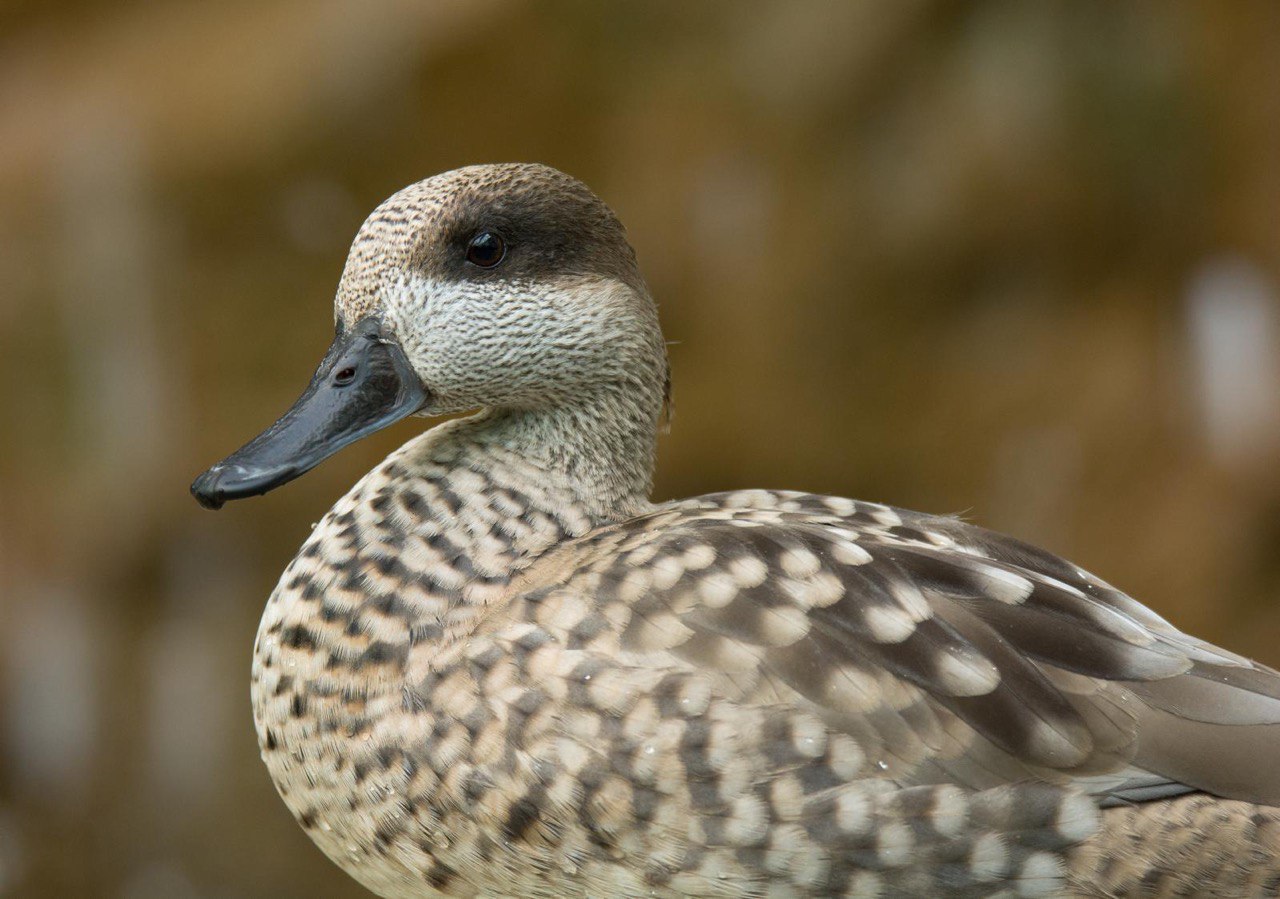
The breeding season for the marbled teal (Marmaronetta angustirostris) in 2025 confirms a positive trend, with 172 breeding females and 1,427 chicks, according to data from the species’ Working Group, coordinated by the Ministry for Ecological Transition and Demographic Challenge (MITECO) and involving the autonomous communities where the species is present.
The figures show a notable increase in productivity over the last year, with 32% more breeding females and 77% more chicks born compared to 2024, a season that documented record figures with 130 females and 806 chicks. The analysis of the series thus consolidates the best reproductive scenario for the species in the last two decades and shows that the overall productivity of the population remains at favourable levels.
The territorial distribution of reproduction in 2025 is similar to that of previous years, with Andalusia as the main hub, with 108 broods and 948 chicks, followed by the Valencian Community, with 49 females with chicks and 375 chicks. Further behind are the Balearic Islands (6 females and 30 chicks), the Region of Murcia (5 females and 42 chicks), Catalonia (3 females and 25 chicks) and Castile-La Mancha (1 female and 7 chicks).
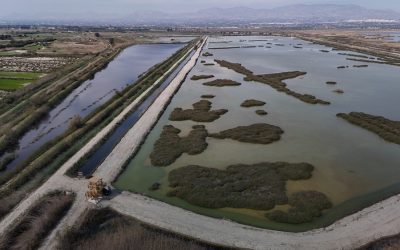
The trend confirms a sustained recovery of the marbled teal since 2021. This recovery is largely due to species conservation and habitat restoration actions, coordinated at the national level and promoted within the framework of the Species Working Group and the LIFE Cerceta Pardilla project. The favourable results of these actions are combined with the good hydrological conditions of the last two years, especially in the Guadalquivir area.
This progression will also enable a more accurate assessment of the impact of conservation measures and the species’ resilience in a changing climate.
Likewise, the results recommend continuing the effort begun in 2018 with its declaration as a critically endangered species and subsequently with the launch of the LIFE Cerceta Pardilla project and the approval of the Strategy for the Conservation of the Marbled Teal, Moorhen, White-headed Duck and Ferruginous Duck.
The measures include maintaining coordinated monitoring at the national level through the Working Group, consolidating the conservation of the most important wetlands for the species, and conducting a more in-depth analysis of interannual variability associated with the water regime, especially in areas subject to recurrent water stress. This cooperation group between environmental administrations and experts meets annually to share population data on this duck, which is classified as critically endangered in Spain, as well as to analyse the progress made in conservation actions and agreements to develop new measures.
LIFE CERCETA PARDILLA
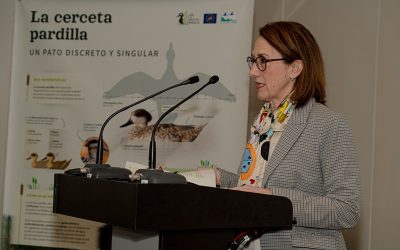
The LIFE Cerceta Pardilla project develops a set of research, conservation, governance and awareness-raising actions to strengthen the status of marbled teal populations in the natural environment, improve the status of wetlands and scientific knowledge of the species.
In this project, coordinated by the Biodiversity Foundation of the Ministry for Ecological Transition and Demographic Challenge, the participating partners are the ministry itself via the Segura River Basin Authority and Tragsatec, the Andalusian Government (via the Regional Ministry of Sustainability and the Environment and the Environment and Water Agency), the Valencia Regional Government (via the Regional Ministry for Environment, Infrastructure and Territory), the Murcia Regional Government (via the Regional Ministry for the Environment, Mar Menor, Universities and Research), as well as the non-governmental organisations SEO/BirdLife and ANSE. The project is supported by the LIFE Program of the European Union and the Directorate-General for Water.