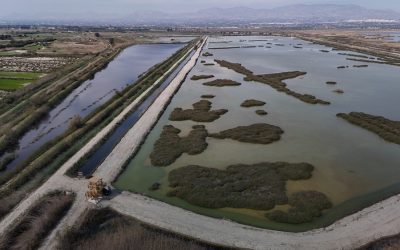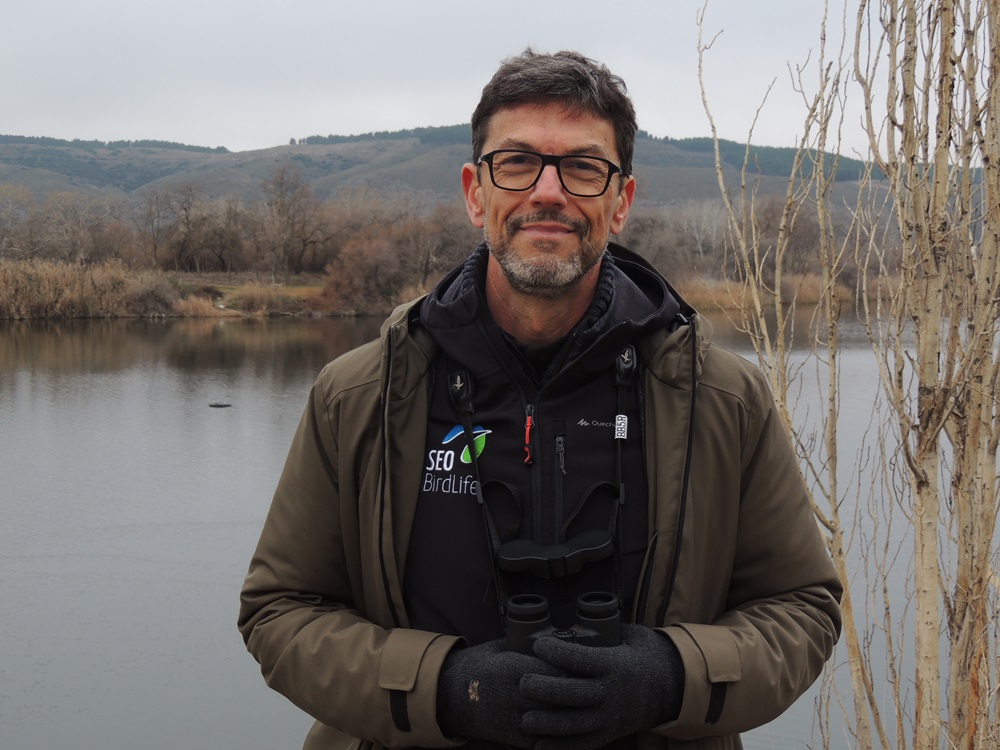
We spoke with Mario Giménez Ripoll, coordinator of SEO/BirdLife’s actions in the LIFE Cerceta Pardilla project. This conservation organisation, a partner in the project, has developed various awareness-raising activities aimed at the education, volunteering and tourism sectors, with the aim of strengthening social support for the conservation of the species. It has also carried out habitat improvement actions on the El Espigar estate, in the El Fondo Natural Park, in Elx, acquired within the framework of LIFE.
As part of the project, SEO/BirdLife has produced a Manual of Good Practices for Birdwatching Tourism in Wetlands. Why was it necessary to produce this manual, who is it aimed at and why was it developed as part of the LIFE Cerceta Pardilla project?
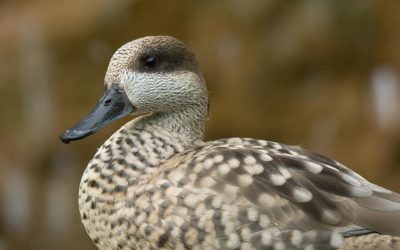
Wetlands are highly attractive areas for birdwatching and ornithological tourism, as they are home to a wide variety of species, including some endangered ones such as the marbled teal. This natural wealth and the presence of rare and fragile species attract even more observers and tourists, making responsible management particularly necessary. The Manual of Good Practices for Ornithological Tourism in Wetlands seeks to ensure that the activity not only avoids negative impacts, but also contributes to conservation, as it can raise awareness among visitors and support the local economy.
It is aimed at birdwatchers, technical managers in government agencies, tourism service companies and tourist accommodation providers, as they all play a key role in protecting these areas and promoting sustainable tourism. The LIFE Cerceta Pardilla framework is ideal for this type of initiative, as it allows for the conservation of endangered species to be integrated with awareness-raising and the development of local economic activities.
What are the main recommendations for developing responsible tourism in wetlands?
The ethical code for responsible tourism in wetlands is based on common sense and respect for the environment. Birdwatching should never cause any kind of impact or disturbance to the birds themselves or to the areas where they live, even if this means foregoing a better view or photograph. The main recommendations include always following marked paths, respecting signage and using the available public infrastructure. It is also important to be respectful of the people who work or live in these areas, and to bear in mind that they may also be private property. Birdwatching tourism companies are essential allies in ensuring that their activities do not have a negative impact and in communicating the needs and values of species and habitat conservation. The organisation of visits and the availability of adequate infrastructure are key to minimising impact and ensuring that birdwatching is carried out in a sustainable manner.
SEO/BirdLife has also developed, in coordination with ANSE, a programme of educational activities aimed at schoolchildren and teachers. What did this programme consist of and what results did it achieve?
We have worked with teaching units and travelling exhibitions, giving talks to teachers and pupils, and organising visits to natural areas so that students in the main areas where the species is present can learn first-hand about the importance of conserving wetlands and species such as the marbled teal.
We have observed a high level of receptivity in schools and the results of the programme have been very positive. The combination of teaching materials, classroom talks and visits to natural areas, when possible, has worked very well. We plan to continue with these awareness-raising activities. In total, 145 awareness-raising sessions have been held for 4,599 students from 50 schools, as well as three editions of the course for teachers and educators, in which 81 people have participated.
An Environmental Volunteering programme has also been carried out, as part of which 56 activities have been implemented with the participation of more than 874 people.
Considering the results obtained in the LIFE Cerceta Pardilla project, of which you have been partners, how does SEO/BirdLife, as a bird conservation organisation, view the future of the species?
At SEO/BirdLife, we are optimistic about the future of the marbled teal. The results obtained within the framework of LIFE Cerceta Pardilla show that, with decisive and well-targeted actions, it is possible to improve the conservation status of critically endangered species.
We have exceeded our initial targets, such as reaching 125 breeding pairs in the wild (the latest census recorded 172 breeding pairs), and we have secured the management of 150 hectares of wetlands in El Fondo Natural Park, providing a safe habitat for the marbled teal. We have also made significant progress in understanding the species, particularly its relationship with the wetlands of North Africa. The challenge now is to ensure the continuity of these actions and collaboration with partners in North Africa, which is key to the future of the marbled teal.